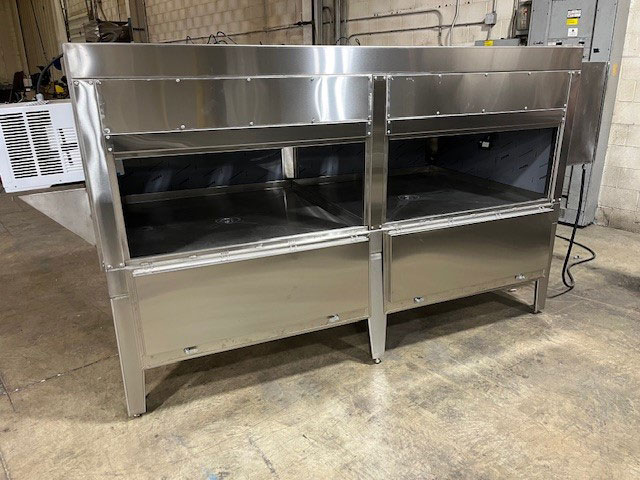
CETS Phytotron systems were originally developed for seed potato production. This is one of agriculture's more demanding applications for clean, consistent planting material. The same capabilities that made the technology effective there make it useful across a broader range of crops, industries, and growing needs.
Producing clean, consistent planting material requires reliable sanitation, repeatable conditions, and the ability to run continuous cycles year-round.
Phytotron systems support the rapid multiplication of high-quality initial planting material in a contained, controlled environment. The enclosed design helps limit exposure to pests and disease, while programmable growing conditions keep results consistent from one cycle to the next.
For crops where quality and consistency directly affect value, managing key growing variables without the overhead of large greenhouse infrastructure matters.
The Phytotron offers greenhouse-like control in a compact, more economical format. Its programmable environment, precision nutrient delivery, and enclosed design make it well-suited for crops where outside variables, seasonal limitations, or space constraints are a challenge.
Variety trials, crop development, and plant research require growing conditions that can be precisely set, consistently repeated, and carefully documented.
The Phytotron provides a programmable, data-logging environment that supports repeatable experimental conditions. Multiple units can be run independently, allowing different variables to be tested simultaneously.
The CETS Phytotron can function as a compact molecular farming facility, supporting the use of plants as production systems for high-value biological materials. Producing these materials requires a uniform, traceable crop with consistent levels of active ingredients. That means growing conditions need to be controlled, documented, and repeatable.
The Phytotron's enclosed, stainless steel construction supports thorough sanitation between cycles and limits exposure to outside environmental variables. Programmable controls and data-logging capabilities allow production parameters to be set, monitored, and recorded throughout each cycle. Compared with open-field production, this kind of controlled environment can help reduce variability and risk while supporting year-round operation independent of weather or season.
These characteristics make the Phytotron worth exploring for applications that require consistent crop quality and a more resilient domestic production approach.
Domestic production of critical biological materials can be vulnerable to weather, seasonal growing windows, geographic concentration, and foreign sourcing.
Phytotron systems offer a contained, year-round production environment that operates independently of outside conditions. Controlled parameters, documented growing records, and strong sanitation controls support applications where consistency, traceability, and production independence are important.
Universities, research institutions, and educational programs need growing environments that support hands-on learning and plant science work without the cost and complexity of large greenhouse facilities.
The Phytotron's intuitive controls and compact footprint make it a practical option for educational and research settings. It provides a real controlled-environment growing experience while remaining accessible and straightforward to operate.
All Phytotron systems share the same core capabilities. These are what make the technology relevant across so many different applications.